
 Children’s artwork gallery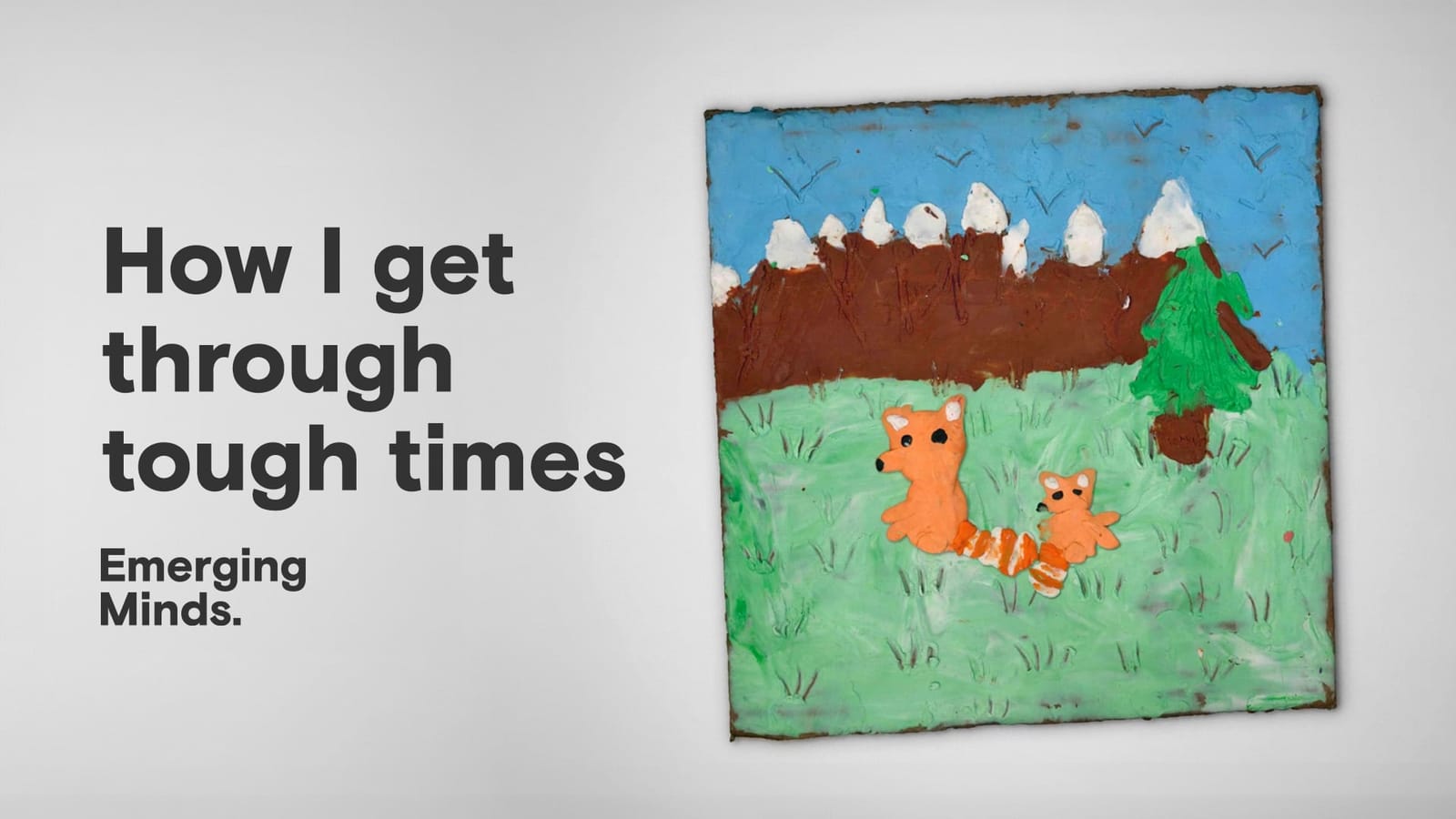


Discover more resources
-
Fact sheet
Supporting children’s social connections in tough times
Emerging MindsSocial connections provide an important network for supporting children’s wellbeing and helping them get through tough times. When things are difficult for families, it can be hard to support these connections. -
Fact sheet
Unmasking stigma: Effects on families
Emerging MindsThis resource was created to help us understand how stigma effects families. Families share their stories to show the harms stigma can cause. -
Fact sheet
Standing against stigma
Emerging MindsStigma can show up in our thoughts about others even when we don’t want it to. This resource can help us notice and question those thoughts. -
Fact sheet
Talking to children about family money struggles
Emerging MindsThere are ways to talk to children about money issues that prevent them from blaming themselves, or their parents, for the family’s financial situation. -
Fact sheet
Families responding to racism
Emerging MindsRead about some of the many ways families respond to the effects of racism and support their children. -
Webinar
Promoting collaboration in early education to support children’s mental health
Child Family Community Australia & Emerging MindsThis webinar explores how early childhood educators can work together with mental health professionals and families to support children’s mental health and wellbeing (including those impacted by trauma). Drawing on emerging evidence, the webinar also considers how collaboration can build educators’ confidence and wellbeing, improve educator-child interactions, and support children’s mental health, wellbeing and their ability to learn and engage. -
Webinar
Implementing support for children experiencing attention and behaviour challenges
Emerging Minds and Royal Australian College of General Practitioners (RACGP)Turning plans into practice is key to supporting children and families effectively. This webinar focuses on implementing support goals for children with attention and behaviour challenges, with practical tips for reviewing progress and adapting strategies over time. Panellists also explore how GPs can support families to navigate service pathways as well as connect families with the right resources to ensure care is coordinated, holistic and strengths based. -
Report
Walking together: Co-created workforce development strategies to support Aboriginal and Torres Strait Islander children and families
WellMob and Emerging MindsThis is a summary of a report based on findings from the Social and Emotional Wellbeing Workforce Development Project led by WellMob and Emerging Minds. -
Short article
Promoting collaboration between early education and mental health professionals to support trauma-impacted children
Yihan Sun (Monash University) & Anagha Joshi (Australian Institute of Family Studies)This short article describes the value of cross-sector collaboration between early childhood education and mental health professionals in supporting trauma-impacted children. -
Guide
Nature nurtures: Practitioner guide
Emerging Minds and Parenting Research CentreThis guide aims to support practitioners to consider time spent in nature when working with children, parents and families. It is based on a paper led by the Parenting Research Centre and Emerging Minds. -
Webinar
Responding to uncertainty: A compassionate approach to practice
Child Family Community Australia & Emerging MindsThis webinar explores compassion and uncertainty tolerance and how they shape the way we understand and relate to ourselves, our colleagues and the families we support. Together, these concepts underpin reflective, relational practice and support more thoughtful, responsive engagement grounded in curiosity and care. -
Webinar
A ‘whole child’ approach for families waiting on an ADHD assessment
Emerging Minds and Royal Australian College of General Practitioners (RACGP)This panel discussion explores how developmental and behavioural challenges reflect the ‘whole child’ – their emotions, relationships, environment, culture and experiences. It focuses on practical ways GPs can frame behaviour within a broader context and use this approach to connect families with supports and resources from the first consultation. Panellists discuss how this approach can lead to more responsive, strengths-based care for all children and families.